
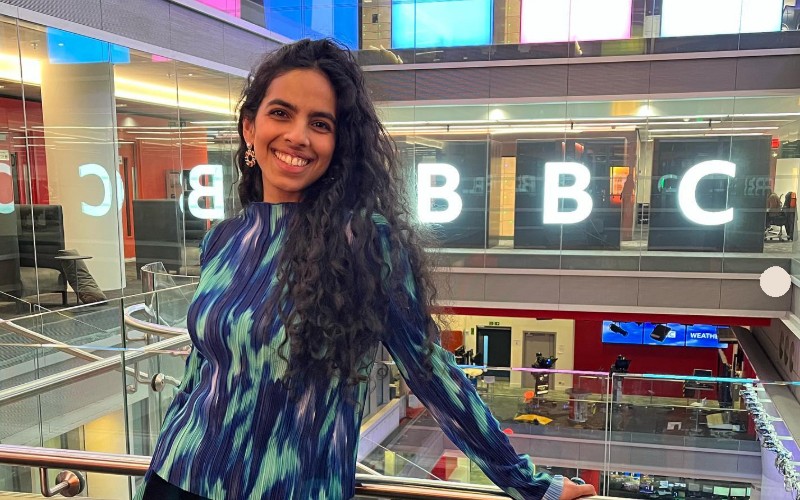
Merlyn Thomas has built a distinctive place in British journalism by examining claims, images and videos that spread quickly online. As a BBC Verify correspondent, she works at the meeting point of journalism, technology and open-source intelligence. Her work helps audiences understand what can be trusted when a major event is surrounded by false claims or manipulated online material.
Her career combines language study, international experience and a strong interest in social issues. Before joining the BBC, she worked and volunteered in the Middle East, gaining experience of refugee support, migrant rights and community life. Those experiences shaped her careful approach to disinformation, climate change and global news.
Who Is Merlyn Thomas?
Merlyn Thomas is a British journalist and BBC Verify correspondent. Her professional work focuses on open-source intelligence, misinformation, investigations and climate disinformation. She explains how digital evidence can be checked, where misleading claims come from and why images or videos may not show what they seem to show.
Her role involves more than presenting a conclusion. She and her colleagues study visual clues, compare sources, assess dates and locations, examine satellite imagery and use data to test claims. This matters during wars, disasters, elections and emergencies, when unverified material can reach millions within minutes.
Merlyn Thomas Education and Early Interests
Merlyn Thomas studied French and Arabic at the University of Cambridge between 2015 and 2019. Her time at Cambridge also gave her a foundation in student journalism. She contributed to Varsity, writing on international affairs, social questions and subjects connected with the Middle East.
French and Arabic gave her access to wider sources, cultures and viewpoints. Her interest in international stories grew through time spent in Lebanon and Egypt.
Building a Journalism Career
Experience in Lebanon
One of her earliest placements was with The Daily Star in Beirut from October 2017 to January 2018. On the Lebanon desk, she wrote about transport policies, refugees and migrant workers, including the effects of the Kafala system.
She also worked with CRTDA, the Collective for Research and Training on Development-Action in Lebanon. She supported focus groups and workshops with UNHCR, UNDP, UNICEF and the Norwegian Refugee Council, including work with refugee women in Chatila, Saida and Bourj Hammoud. This placed her close to communities often reduced to statistics or brief headlines.
Work in Egypt
In 2018, Merlyn Thomas completed placements with Egyptian Streets and Mada Masr Media in Cairo. At Egyptian Streets, she gained digital journalism experience. At Mada Masr, she translated material and reviewed newspapers from across the Middle East.
Her Cairo work covered suicide rates and sexual harassment in Egypt. These sensitive subjects developed her ability to combine translated material, local journalism and personal experiences.
Merlyn Thomas volunteered with Help Refugees in 2016, organising a team of 15, sourcing donations and managing clothing distribution in a refugee camp. She interpreted between Arabic and English and later taught English at a migrant community centre.
Career at BBC News
From Radio to Climate Disinformation
Thomas joined the BBC in 2019 as a Creative Access trainee. She began in radio before moving into climate disinformation and broadcast journalism, examining false claims, distorted statistics and misleading posts about climate change.
She became a senior reporter in February 2023 and later moved into her current BBC Verify correspondent role in October 2025. Her work now covers a broad range of subjects, while climate disinformation remains an important part of her experience.
The BBC Verify Role
BBC Verify helps audiences assess disputed claims and digital evidence. Its teams use open-source intelligence, satellite images, geolocation, data analysis, visual checks and traditional journalism. Thomas helps establish when, where and how digital material was created.
Evidence Behind a Claim
Her work has included investigations linked to conflict, climate events and online deception. In coverage of the Nepal-Tibet flash floods, BBC Verify traced the deadly path of flooding after a glacial collapse, using verified videos and satellite imagery to show its effect on towns and communities.
She has also discussed methods used by BBC specialists when examining deaths in Iran. Such work can involve checking videos frame by frame, comparing landmarks, testing timelines and separating genuine evidence from old footage or material taken elsewhere.
How She Examines Digital Claims
Open-Source Intelligence
Open-source intelligence, or OSINT, involves gathering and testing material from lawful public channels. This may include photographs, videos, maps, satellite images, weather records, flight data and social media posts. Its value comes from careful verification.
Thomas’s work reflects this method. A video may contain clues about a road, building, landscape, language, shadow or weather. Comparing those details with reliable records can establish whether it is genuine and honestly presented.
Climate and Conflict Verification
False claims can cause real harm. Climate disinformation can weaken trust in scientific evidence and delay action. During conflict or disaster, misleading content can inflame fear, hide suffering or blame a group. Verification gives audiences a clearer basis for understanding events.
Her Arabic, French, international journalism and community work add depth to this process. They help her consider language, local context and the human effects behind digital evidence. Strong verification combines technical checks with human understanding.
Recognition and Professional Influence
Her work earned recognition through the John Schofield Trust. She became a Fellow on its 2022 Early Career Programme, later serving as a Senior Fellow and mentor for undergraduate journalism students. In 2023, she was shortlisted for BBC News Rising Star of the Year.
She was named a Rising Star of the Year in the 2025 BBC News Awards. She has also spoken at events such as the Sir Harry Evans Summit about false content and journalistic responsibility.
Merlyn Thomas’s Age and Personal Life
Companies House records her full name as Merlyn Cecil Thomas and gives her birth month and year as October 1996. On that basis, Merlyn Thomas is 29 years old in August 2026 and will turn 30 in October. The record also identifies her as British and resident in the United Kingdom. Her Cambridge dates and early career timeline fit this background.
Is Merlyn Thomas Married?
Her marital status has not been confirmed by a reliable source, and no trustworthy source identifies a husband. Companies House records her as a director of Bethel1 Ltd, a private property company. A co-director is named in the filing, but a shared business role does not establish a personal relationship. No person should be presented as her husband without direct confirmation.
Why Her Work Matters
The modern news cycle is filled with images, statements and videos that can be copied, altered or taken out of context. Merlyn Thomas brings patience and technical care to this environment. Her work connects careful evidence with clear explanations that ordinary audiences can follow during fast-moving events. Verification means explaining evidence and how conclusions are reached.
From refugee communities in Lebanon and Egypt to climate claims and digital evidence at the BBC, her career has followed one purpose: making complex events easier to understand without losing their human meaning. Her experience and investigative skill have made her a notable voice in verification journalism.
Also Read